十五. 模拟依赖属性实现
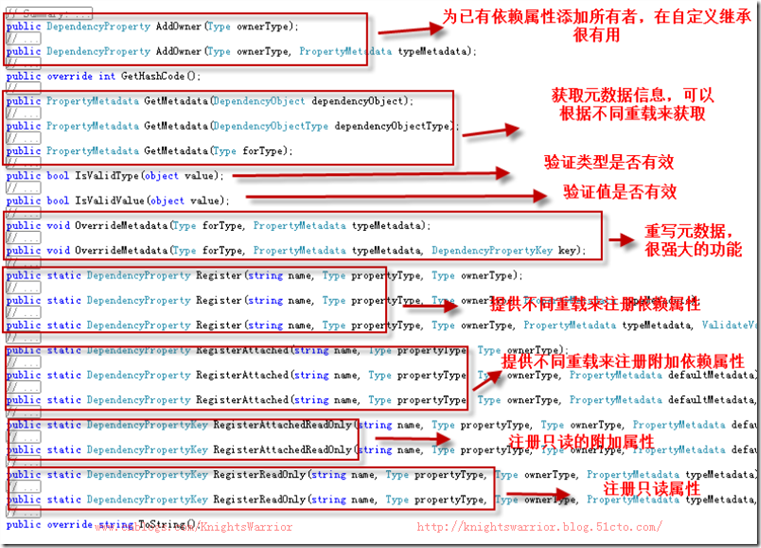
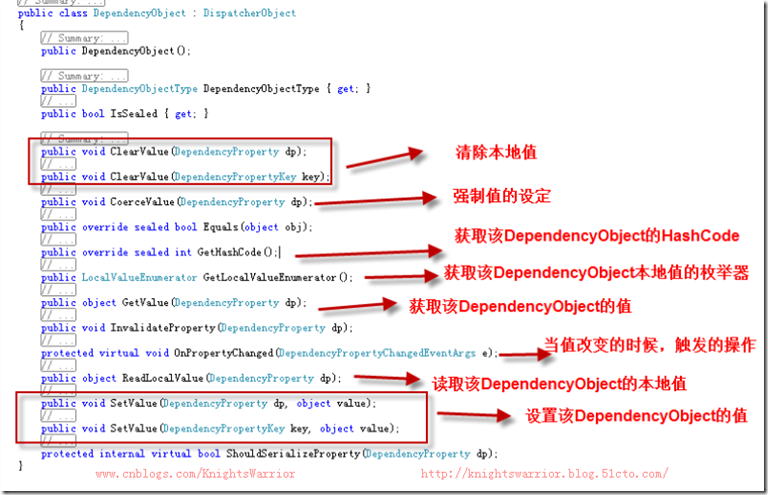
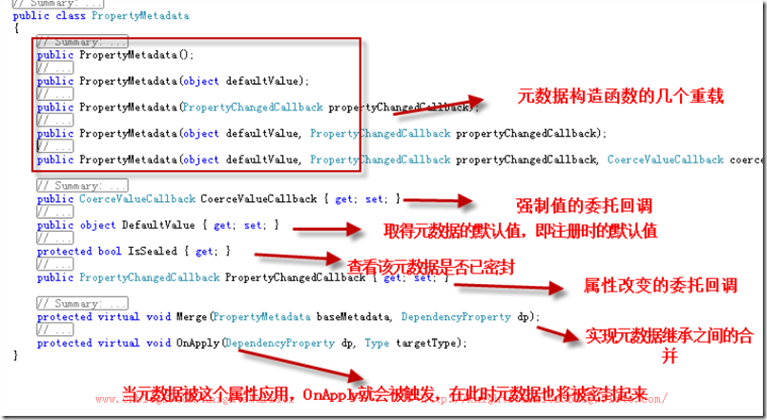
古人有”不入虎穴焉得虎子“的名句,我们今天也试着入一入虎穴,探探依赖属性里面到底藏着什么不可告人的秘密,在往下讲之前,我们先来看一下DependencyObject 、DependencyProperty 以及PropertyMetadata到底包含哪些功能,如下面三幅图

通过前面三幅图,我们就可以了解WPF依赖属性系统的大体结构以及主要功能,再者通过前面我们对它的使用,对它的内部实现也有一个相对比较清晰 的认识,那么接下来要做的就是:借助Reflector+VS调试内部代码功能一起来研究其内部的实现原理。 本来想详细写清楚开发的过程,但是有点多,所以我打算直接讲这几个类。大家也可以通过这个思路来试一试,同时还可以参考Mono的源码、WF的依赖属性源 码等。这里要推荐的是周永恒的博客,此人对技术的理解很是透彻,博文虽少,但每篇都堪称经典,所以他的文章,我都通读三遍。虽然大多概念都懂,并且读到深 处也能产生共鸣,其最主要目的还是学习他这种”阐述问题的思路“,后来也和此人MSN聊过几次。所以这个依赖属性的框架在某些程度上也借鉴了他的一些写 法。
有了前面的思路,首先定义DependencyProperty这个类,它里面存储前面我们提到希望抽出来的字段。DependencyProperty内部维护了一个全局的Map用来储存所有的DependencyProperty,对外暴露了一个Register方法用来注册新的DependencyProperty。当然,为了保证在Map中键值唯一,注册时需要根据传入的名字和注册类的的 HashCode取异或来生成Key。 所以我们就可以完成DependencyProperty类了,代码如下,介绍详见代码注释。:
public sealed class DependencyProperty
 {
     //全局的IDictionary用来储存所有的DependencyProperty
     internal static IDictionary<int,DependencyProperty> properties = new Dictionary<int,175);">DependencyProperty>();
     //存储元数据的集合
     private List<PropertyMetadata> _metadataMap = new PropertyMetadata>();
     private static int globalIndex = 0;
     private PropertyMetadata def_metadata;
     private bool attached;
     private string name;
     private int _index;
     private Type owner_type;
     private Type property_type;
     private Type validator_type;

     // 构造函数
     private DependencyProperty()
     {

     }

     //构造函数私有,保证外界不会对它进行实例化
     private DependencyProperty(string name,175);">Type propertyType,175);">Type ownerType,175);">PropertyMetadata defaultMetadata)
     {
         this.name = name;
         property_type = propertyType;
         owner_type = ownerType;
         def_metadata = defaultMetadata;
     }

     // 常用属性
     public PropertyMetadata DefaultMetadata
     {
         get { return def_metadata; }
     }

     public bool IsAttached
     {
         get { return attached; }
     }

     public int Index
     {
         get { return _index; }
         set { _index = value; }
     }

     public string Name
     {
         get { return name; }
     }

     public Type OwnerType
     {
         get { return owner_type; }
     }

     public Type PropertyType
     {
         get { return property_type; }
     }

     public Type ValidatorType
     {
         get { return validator_type; }
     }


     public override int GetHashCode()
     {
         return name.GetHashCode() ^ owner_type.GetHashCode();
     }

     //注册依赖属性
     public static DependencyProperty Register(string name,175);">Type ownerType)
     {
         return Register(name,propertyType,ownerType,new PropertyMetadata());
     }

     //注册的公用方法,把这个依赖属性加入到IDictionary的键值集合中,Key为name和owner_type的GetHashCode取异,Value就是我们注册的DependencyProperty
     public static PropertyMetadata defaultMetadata)
     {
         DependencyProperty property = new DependencyProperty(name,defaultMetadata);
         globalIndex++;
         property.Index = globalIndex;

         if (properties.ContainsKey(property.GetHashCode()))
         {
             throw new InvalidOperationException("A property with the same name already exists");
         }

         //把刚实例化的DependencyProperty添加到这个全局的IDictionary种
         properties.Add(property.GetHashCode(),property);
         return property;
     }

     //注册只读依赖属性
     public static DependencyProperty RegisterReadOnly(string name,175);">PropertyMetadata typeMetadata)
     {
         DependencyProperty property = Register(name,typeMetadata);
         return property;
     }

     //注册附加依赖属性
     public static DependencyProperty RegisterAttached(string name,175);">Type ownerType)
     {
         return RegisterAttached(name,175);">PropertyMetadata(),null);
     }

     public static PropertyMetadata defaultMetadata)
     {
         return RegisterAttached(name,defaultMetadata,175);">PropertyMetadata defaultMetadata,175);">Type validatorType)
     {
         true;
         property.validator_type = validatorType;
         return property;
     }

     //子类继承重写以及其他需要重写Metadata的时候使用
     public void OverrideMetadata(Type forType,175);">PropertyMetadata metadata)
     {
         metadata.Type = forType;
         _metadataMap.Add(metadata);
     }

     //获取元数据信息
     public PropertyMetadata GetMetadata(Type type)
     {
         PropertyMetadata medatata = _metadataMap.FirstOrDefault((i) => i.Type == type) ??
             _metadataMap.FirstOrDefault((i) => type.IsSubclassOf(i.Type));
         if (medatata == null)
         {
             medatata = def_metadata;
         }
         return medatata;
     }

 }
有了DependencyProperty ,那么接下来就需要定义DependencyObject 来使用这个DependencyProperty 。首先使用DependencyProperty .Register方法注册了一个新的DependencyProperty ,然后提供了GetValue和SetValue两个方法来操作刚刚构造的DependencyProperty 。这个时候我们看到一个简单的依赖属性系统已初见端倪了,详见代码注释。
namespace Realize_DPs
{
    public abstract class DependencyObject :  IDisposable
    {
        //添加一个List来记录修改信息
        private EffectiveValueEntry> _effectiveValues = new EffectiveValueEntry>();

        //属性包装器,通过它来访问依赖属性
        public object GetValue(DependencyProperty dp)
        {
            //首先通过判断是否改动过,以此来决定是读元数据的默认值还是改动了的值
            EffectiveValueEntry effectiveValue = _effectiveValues.FirstOrDefault((i) => i.PropertyIndex == dp.Index);
            if (effectiveValue.PropertyIndex != 0)
            {
                return effectiveValue.Value;
            }
            else
            {
                PropertyMetadata metadata;
                metadata = DependencyProperty.properties[dp.GetHashCode()].DefaultMetadata;
                return metadata.DefaultValue;
            }
        }

        //属性包装器,通过它来设置依赖属性的值
        public void SetValue(DependencyProperty dp,object value)
        {
            //首先通过判断是否改动过,以及改动过,则继续对改动过的元素赋值,否则对_effectiveValues增加元素
            EffectiveValueEntry effectiveValue = _effectiveValues.FirstOrDefault((i) => i.PropertyIndex == dp.Index);
            if (effectiveValue.PropertyIndex != 0)
            {
                effectiveValue.Value = value;
            }
            else
            {
                effectiveValue = new EffectiveValueEntry() { PropertyIndex = dp.Index,Value = value };
                _effectiveValues.Add(effectiveValue);
            }
        }

        public void Dispose()
        {
            //暂时还没有处理
        }
    }

    internal struct EffectiveValueEntry
    {
        internal int PropertyIndex { get; set; }
        internal object Value { get; set; }
    }
}
(编辑:安卓应用网)
【声明】本站内容均来自网络,其相关言论仅代表作者个人观点,不代表本站立场。若无意侵犯到您的权利,请及时与联系站长删除相关内容!
|